Articles
A Decade of the Juvenile Justice Act: What It Really Means in the Real World
For most of my life, I viewed every action as a binary: it was either right or wrong. If someone had done a bad deed, they deserved to be punished. I never stopped to ask why they acted as they did, or what circumstances had led to it, until I visited one of the Government Observation Homes for Boys in Uttar Pradesh. Yet again I was reminded that the world is rarely so black and white.
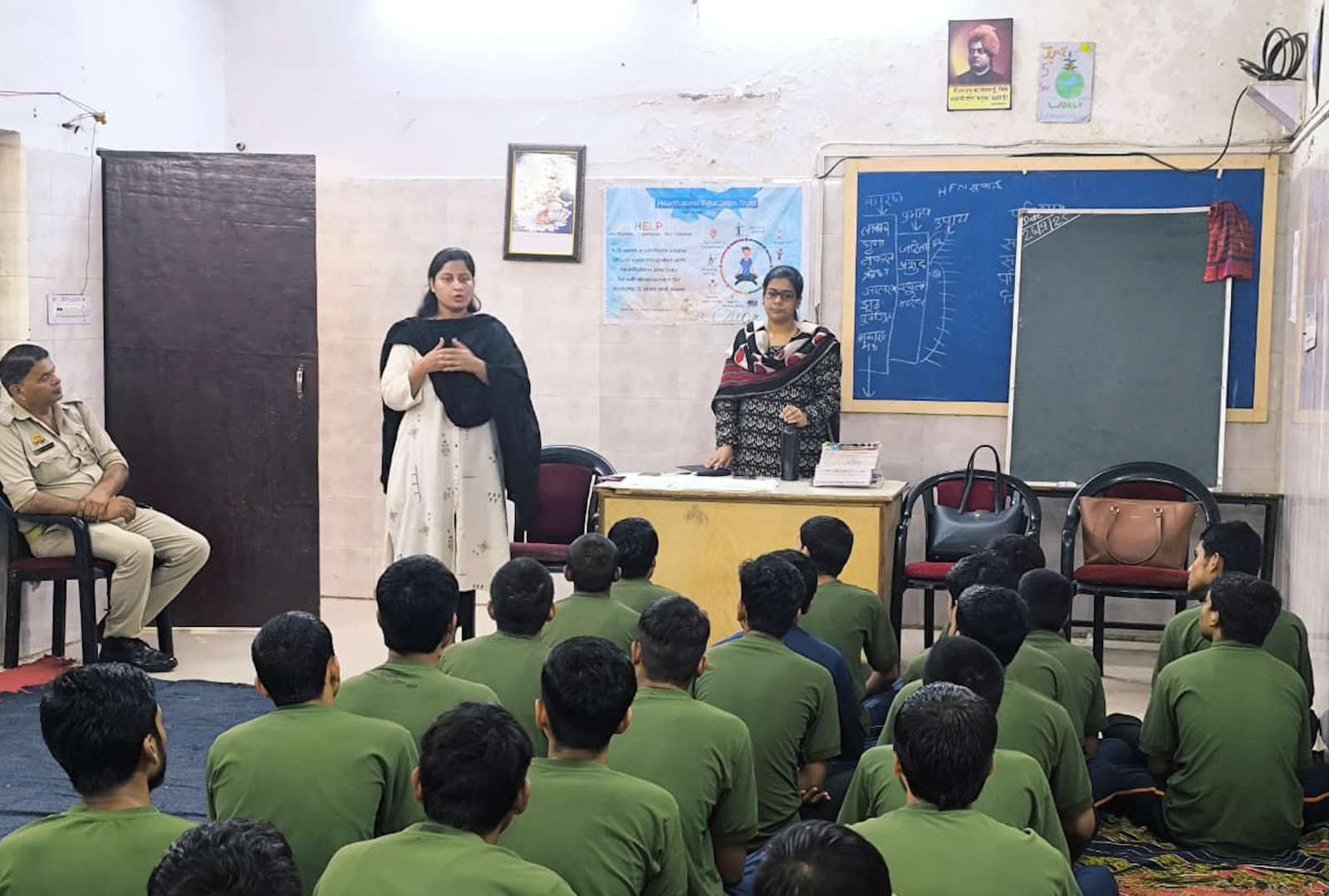
On a windy November afternoon, I stepped into the compound of an observation home. At first glance, one could mistake it for a primary school with a spacious quadrangle, walls painted with colourful illustrations and swings and monkey bars in what appeared to be a play area. But then my eyes caught the locks, the grills, the uniformed guards, and the children in blue, each with a large number printed on their backs. They spoke in hushed whispers as they turned to see “someone new” who had walked in.
The observation home was a facility where children alleged to have committed an offence stayed while their case was ongoing. The aim was not to punish them, but to provide a space that supported rehabilitation and reform during their time there. However, while the system is founded on the idea of reform, the reality is not so simple. Living there comes with its own set of challenges. This visit became a moment to pause and reflect, especially as the Juvenile Justice Act marked 10 years since it came into force.
I had come with iProbono India’s Junior Program Officer Haya Wakil on her weekly visit to the facility. At the time of our visit, the facility housed around 106 boys between the ages of 12 and 18.
I looked around to see all the boys engaged busily in some kind of task. A few were cleaning, others helping in the kitchen. A group sat in a classroom, facing a monitor and attending an online English class.
While Haya spoke to the staff there, I took the chance to speak with the boys. Nitin*, a 14-year-old stood slightly slouched, his eyes fixed on the floor. I strained to hear him in a noisy room as he spoke to me.
He had been living with his father, who earned a living packing saffron into boxes and delivering them to traders. Nitin often accompanied him. His mother, who had separated from his father, lived in Delhi with his two older siblings. Nitin had been brought to the observation home five months earlier for stealing a small amount of cash.
Shortly before Nitin was brought in, his father passed away from a heart attack, leaving him to fend for himself. The other boys who were also alleged to have been involved in theft with Nitin had since been released, some within weeks, others after a few months. Nitin, however, was still waiting for his family or a guardian to help him get out of there.
Under the juvenile justice system, I was told, children are meant to be released into the care of a parent or guardian wherever possible. But the number Nitin had for his mother was no longer working. And when families like Nitin’s cannot be located or contacted, children can remain in observation homes far longer than intended.
“My mother probably thinks I am still working with my father,” he told me. “She doesn’t know that I am here. She was contacted, but the number I remembered is not in service anymore.”
Nitin’s story was a stark illustration of how something as small as a non-operational phone number can stretch into months of lost time in a child’s life. But I soon realised he was not the only one there with a story like this.
Ahmed* was one of the students on the front bench of the online English class, eagerly answering the teacher’s questions.
“I used to really enjoy studies,” he said, “I was supposed to go to Aligarh Muslim University in class 11. I had cleared the test. But then I had to come here.”
Ahmed had been brought to the observation home nine months ago in connection to a case that was still pending when I met him in November.
“I wanted to be an engineer,” he said, “but I think now I can’t go down that path anymore. When all of this is behind me, I might try my luck at business.”
His days at the observation home were tightly structured, morning exercise, prayers, cooking, cleaning, and classes. In whatever spare moments he could find, Ahmed read. What added to the pressures and stress of settling into his new life in the facility was the cultural difference he felt when with the other boys there.
“One of the first disagreements was over a Bhojpuri movie everyone else wanted to watch and I didn’t. But now I watch them with the others,” he laughed.
Despite everything, he said as he looked around at the activities going on in the different rooms, the experience had taught him discipline, something that he believed would stay with him for life. There was, however, one thing he wished were different, the way they were sometimes spoken to.
“Some people think we are the worst kind of human beings,” he said.
Ahmed was released on bail later that month, though his case is still ongoing.
Listening to these children helped me understand the thinking behind India’s Juvenile Justice Act. The law rests on the idea that children are still developing, and that responses to wrongdoing must focus on reform and rehabilitation rather than only punishment. I understood why the JJ Act gives a second chance to these children in conflict with the law and supports them in reintegrating into society.
Juvenile Justice is one of the core focus areas of iProbono India, the organisation I work with. At the observation home and similar institutions across the country, my colleagues who are lawyers focus on ensuring that children are treated with fairness and dignity, and that rehabilitation remains at the centre of the process. A large part of this work involves helping children and their families understand their rights, something that is often unclear or inaccessible to them.
Many families are vulnerable and unsure of how the system works, Haya told me while we spoke to the children at the observation home. Sharing her experience, she said that this often left them exposed to exploitation, with individuals demanding money while promising bail or faster release. In some cases, children were encouraged to plead guilty without fully understanding the long-term consequences of that decision.
10 years after the Juvenile Justice Act came into force, its promise still depends on how we show up, for children like the ones I met that day.
*Names have been changed to protect their identities.