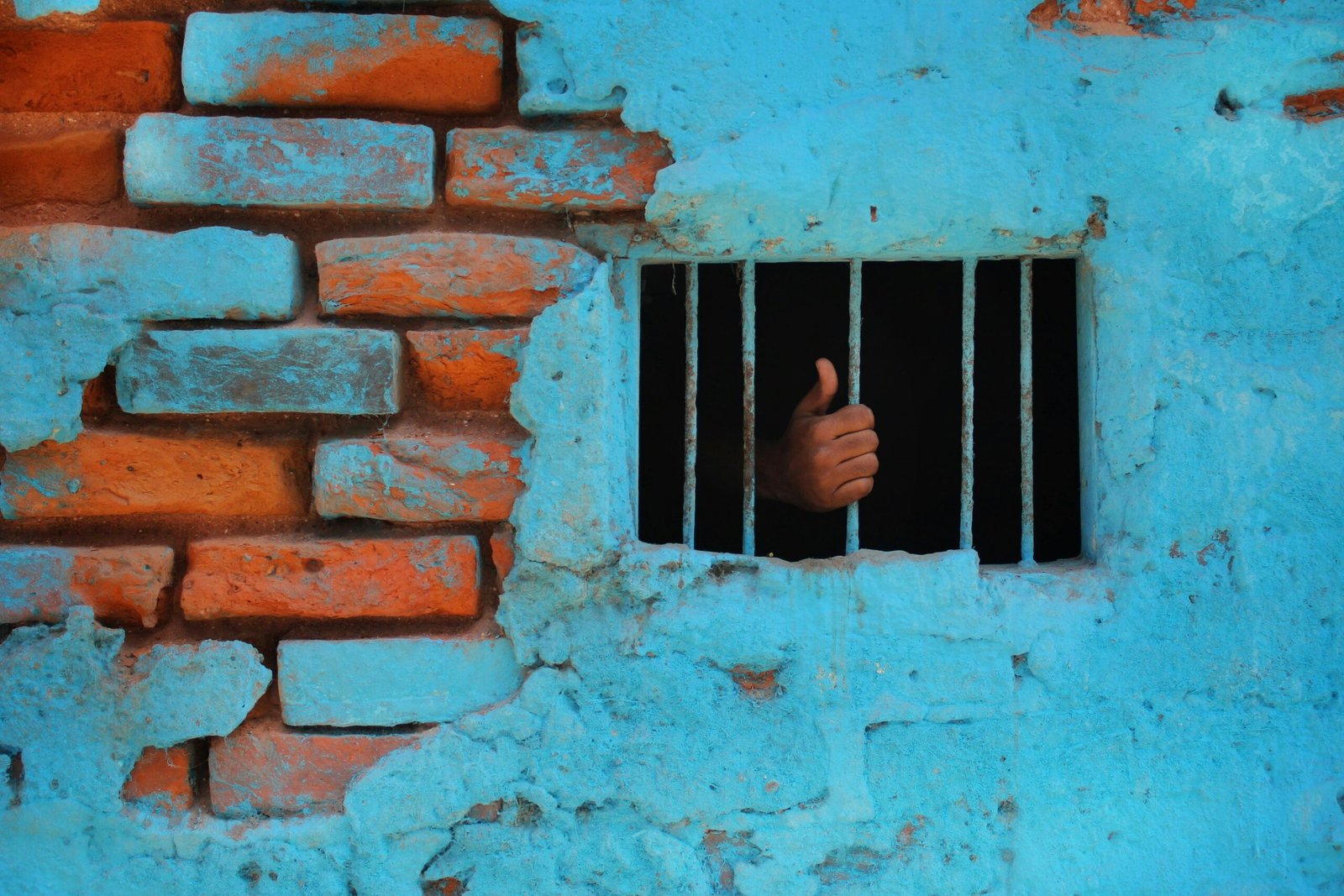
When we hear the words bachcha jail, we often picture iron bars, locked gates, and children confined within visible boundaries. We imagine something we can see. Something concrete. Something we can point at and say – there it is.
But a bachcha jail is not always what it looks like from the outside. What if the strongest bachcha jail had no walls at all? What if it settles quietly inside the mind, long after the gates have opened?
I have often found myself sitting with this thought while walking through correctional spaces meant for children. Spaces that are designed to reform, to rehabilitate, yet at times feel uncomfortably close to a bachcha jail.
If you have never visited one, it is difficult to fully grasp the atmosphere. There is order, the kind of order that quietly enters the body. Doors open and shut at fixed hours. Voices carry authority. Movements are watched, directed, and counted.
Somewhere within this structure, something invisible begins to take shape. It shows up in small ways, like how a child stands before being asked, how quickly they respond to a voice, and how silence becomes more familiar than expression. Many of the children we label as “offenders” are not simply criminal minds. They are minds shaped, slowly, deeply, by experiences they were never meant to confront so early in life.
Trauma. Neglect. Violence witnessed too soon. Anger that had no safe outlet. Survival became a habit. Their behaviour did not emerge overnight. It was built quietly over time, through emotional deprivation, through distorted learning, through environments where fear often replaced safety. Yet, our systems often respond with control more than understanding. Isolate. Discipline. Contain.
Rarely do we pause and ask, what shaped this child to arrive at this moment?
The answers, when they come, are not loud. They come in fragments. In pauses. In sentences that seem simple, but carry entire experiences within them.
One child, even after being released from the Observation Home, found himself pulled back into those routines. He recalled something called “ginti line,” a daily practice where all children were made to stand together while they were counted.
He shared quietly;“Ma’am, beginning mei bahar aane ke baad kaafi tension feel horahi thi, and neend bhi nhi aati jaise wahn nahi aati thi… ki ghar kab jaaenge. Ye yaad aata tha ki ab ginti line ka samay hota tha.” [“Ma’am, in the beginning, after coming out, I used to feel a lot of anxiety, and I couldn’t sleep, just like I couldn’t sleep there… I kept thinking about when I would get to go home. I would remember that this was the time for the ‘ginti line’ (counting line).”] Even outside, his mind continued to follow the clock of the bachcha jail.
Another child, still inside, tried to put into words what the space felt like from within:
“Ma’am yahn boht bekaar lagta, kuch samajh mei bhi nahi aata kabhi kabhi… bas idhar se udhar chale jao, samay nahi kat ta.” [“Ma’am, it feels really awful here. Sometimes I don’t understand anything… you just keep moving from one place to another, and the time just doesn’t pass.”]
If you sit with these words, you begin to understand that this is not just about physical confinement. It is about emotional disorientation. About time stretching endlessly. About not knowing what to do with your thoughts when there is nowhere for them to go. These are not dramatic expressions. They are quiet realities. And yet, they reveal something profound.
Even after stepping out, even after being granted bail, something does not leave them. The body remembers. The nervous system remembers. The mind remains alert, conditioned to routines, to commands, to the echo of “ginti line,” even when no one is calling it anymore.
Imagine lying in your own bed at home, and still feeling like you need to wake up for a count that no longer exists. The gates may open. The documents may say “released.” But the bachcha jail, the one built from fear, confusion, hypervigilance, and survival, quietly walks out within them.
And that is when it becomes impossible to ignore the deeper truth: The real bachcha jail often begins much before the act itself.
It does not begin at the gates. It begins much earlier, in rigid beliefs that quietly take root, in wounded identities, long before a child is ever placed in an Observation Home, or a Samprekshan Grah– what we so easily call a bachcha jail.
It begins in anger that was never understood, in emotions that were never given space, never given language, in trauma that was never processed, only carried, silently, over time.
Perhaps the question is far more unsettling.
When a child walks out, are we truly setting them free?