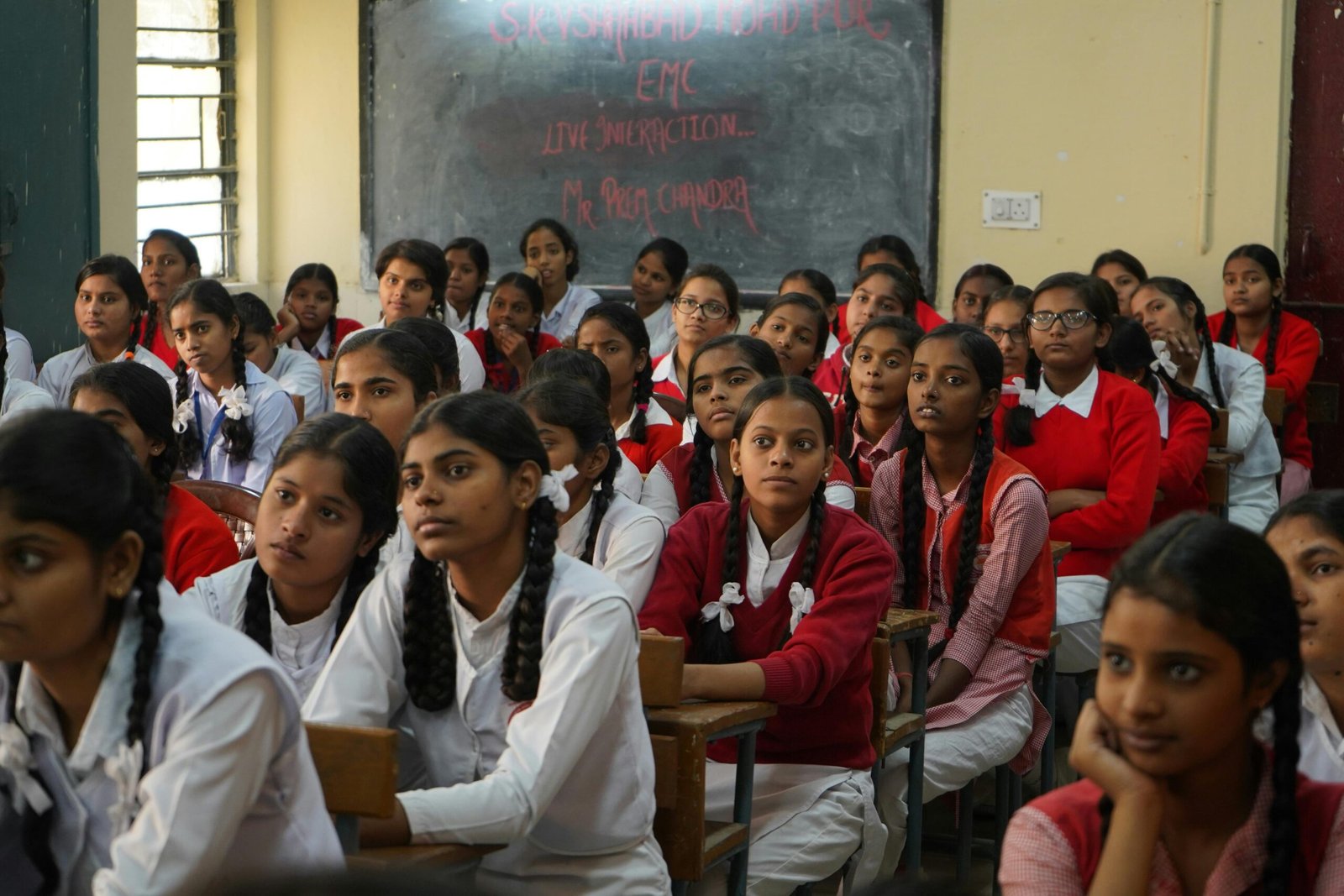
For many girls in India, especially those coming from marginalised communities, education is a luxury. The same is true for six girls we met at an observation home in Uttar Pradesh. Aged between 13 and 17, most of them are the first in their families to receive a formal education, with ambitions of pursuing higher education. Education was a pathway to a safer future, an opportunity that their families didn’t have access to. But continuing their education wasn’t easy; paying the school fees was a constant worry. So when they were offered a chance to have their fees for the next year waived off, it was an opportunity they could not afford to refuse. At the time, what they didn’t fully grasp, were the repercussions of this opportunity.
About 300 kms away from their homes in Ghazipur, the girls now find themselves in an observation home after being caught writing the Class 10 board exam for someone else. Some of them are in Grade 8, others in Grade 11. They say they had been asked by a member of the school administration to write the exam in place of other candidates, with the promise that their school fees for the following year would be waived.
“We did not fully understand what we were being asked to do. We only knew that our education for the next year would be free, so we agreed. We just wanted to study,” said Priya*. (“हमें पूरी तरह समझ नहीं आया कि हमसे क्या कराया जा रहा है। हमें बस इतना पता था कि अगले साल की पढ़ाई मुफ्त हो जाएगी, इसलिए हमने हां कर दी। हम बस पढ़ना चाहते थे।”). And because the request came from a member of the school staff, they felt they had no choice but to comply. They feared that saying no might strain their relationship with the school and create obstacles to continuing their education.
While the girls, all bright students, now find their lives suddenly uprooted, they say the person who maneuvered the operation has faced no consequences. “When we were caught, the school administration denied any role in it after orchestrating it all” said Jyoti*. (“जब हम पकड़े गए, तो स्कूल प्रशासन, जो इसमें शामिल था, उसने किसी भी तरह की जिम्मेदारी से इनकार कर दिया”)
“The squad that caught us repeatedly asked us to tell them the truth, promising we wouldn’t be punished if we explained how and why we were cheating. However, despite our confession, they took no action against the individuals we named; instead, we were brought here,” they said. (“जिस टीम ने हमें पकड़ा, उन्होंने बार-बार कहा कि सच बताओ, सज़ा नहीं होगी। लेकिन हमने सब बता दिया, फिर भी जिन लोगों के नाम लिए, उनके खिलाफ कोई कार्रवाई नहीं हुई, हमें ही यहाँ भेज दिया गया”).
Their decision, they said, was not driven by financial gain or any intent to cheat the system. For them, it was about holding on to the one chance to continue their education. Growing up in families facing constant financial hardship, they viewed education as the only pathway to a better future.
Most of the girls come from families of farmers or daily wage earners. With limited financial resources, their parents are unsure how to navigate the legal process. The girls say, neither they nor their families know what their rights are, what steps they need to take next, or how long the proceedings might last.
“We don’t know how long we will be here, why we are here, or what will happen next,” said Jyoti*.
Such cases are far from rare. Every year, students are caught impersonating candidates in board examinations, often acting on instructions from others rather than devising the scheme themselves. Recent reports show how widespread this issue is. A Hindustan Times report (February 2025) described a case in Haryana where impersonation during board exams involved the use of forged admission cards and the involvement of a local service centre operator. Similarly, the Times of India reported that on the first day of the 2025 UP Board exams alone, nine cases of cheating and 14 instances of impersonation were detected. In another incident reported by India TV (March 2025), authorities uncovered an organised operation in Hardoi, Uttar Pradesh, where several individuals were found solving exam papers at a school principal’s residence.Impersonation in board examinations is a serious offence, yet this case places these girls at a critical legal crossroads. While these girls are now classified as children in conflict with the law, the situation invites a deeper ethical inquiry: are they truly children in conflict with the law, or are they children in need of care and protection? The core of the issue lies in the response of the justice system. Do they belong in observation homes, or would a more rehabilitative framework be more just? In such cases, should the principle of diversion under Section 3(xv) of the Juvenile Justice Act (Care and Protection of Children), 2015 be applied instead to steer these minors away from formal judicial proceedings and toward restorative growth?